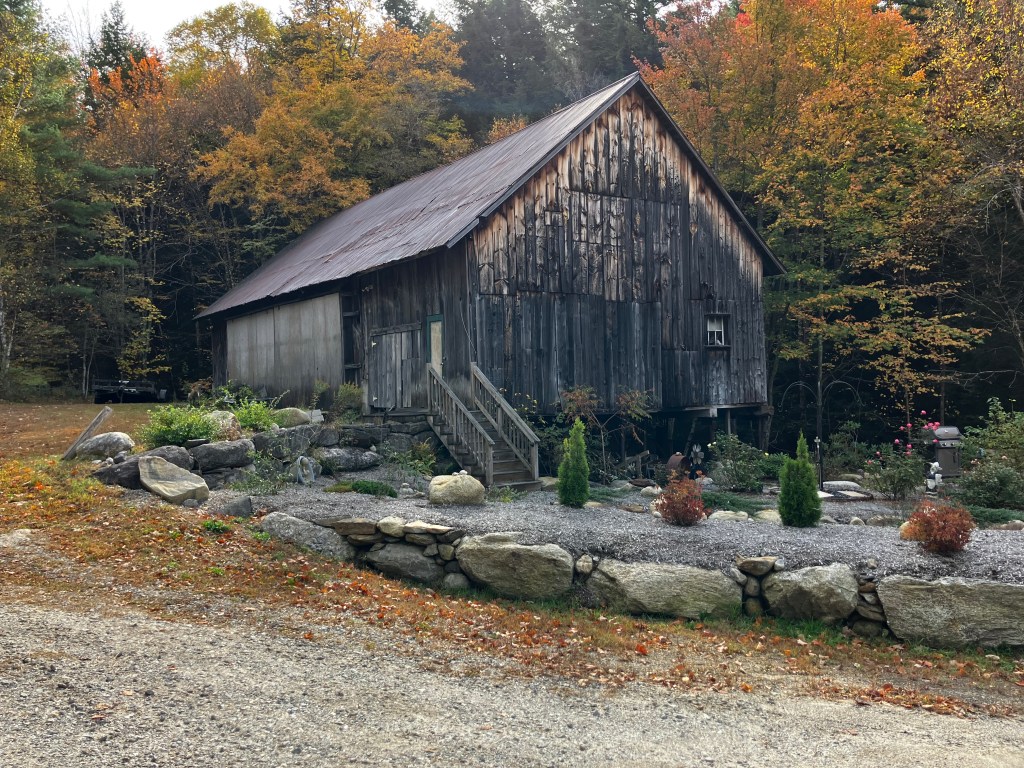
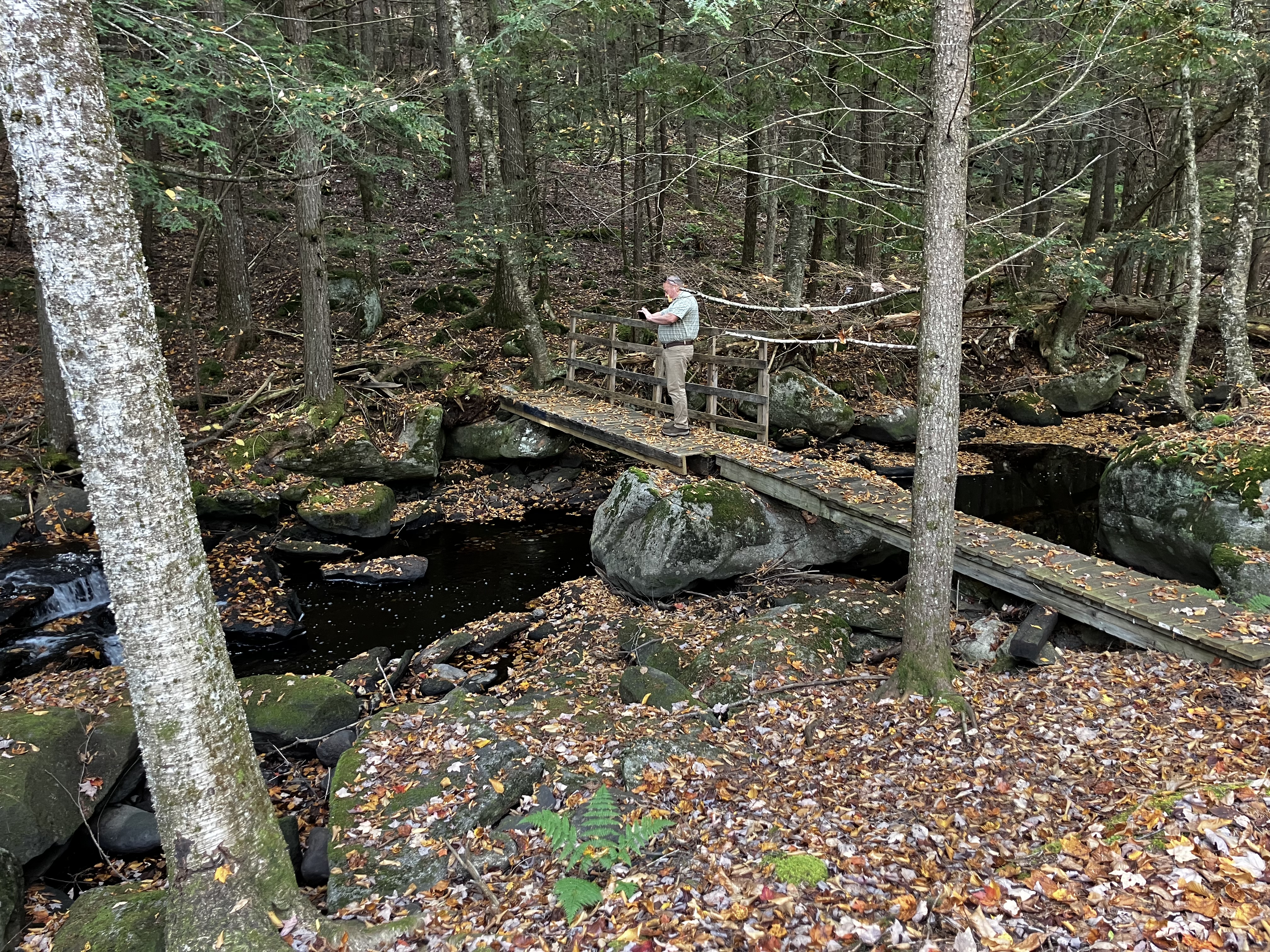
Along with other members of Newport’s Heritage Commission, I visited the site of an old sawmill from the early 1800s. It is known locally as Reeds Mill. The street it is located on is called Reeds Mill Road.
The current owner, Glen West, showed us around the outside of the sawmill. The mill straddles Long Pond Brook which feeds into the Sugar River.
Glen told us that the sawmill was originally owned by Peter Wakefield in the early 1800s. The sawmill, powered by Long Pond Brook, played a vital role in Newport’s early industrial history. The mill was part of Newport’s local economy in the 19th century. Water-powered mills were central to the development of many small towns in New England during this time.
Peter Wakefield was an early settler and prominent figure in Newport, New Hampshire, during the 19th century. Born in the late 1700s, he is perhaps best known for being an influential businessman and community leader in Newport.
Wakefield was involved in various industries that were crucial to the town’s economic development. He was a successful businessman. He owned and operated several enterprises. These included the sawmill and a gristmill, which were essential to Newport’s early industrial growth. His mills provided necessary services to the local farming community, contributing to the town’s agricultural and economic prosperity.
Peter Wakefield was involved in civic affairs. He served in several capacities, such as town selectman and other local government roles. His leadership and influence helped shape the direction of Newport in its formative years.
1823 – Every stream and brook in Newport is harnessed to power one or more sawmills; there are 50 percent more sawmills operated in Newport than in the larger town of Claremont.
Jayna Huot Hooper – Celebrating Community, Newport, New Hampshire 1761-2011
Long Pond Brook, which feeds into the Sugar River, provided the necessary water power to run the mill. Water-powered mills like Wakefield’s were essential for processing timber, a crucial resource in a region rich in forests. Sawing timber into planks was a significant industry at the time. It contributed to the construction boom in Newport and other parts of New Hampshire.
Glen told us that after Peter Wakefield, the sawmill was owned by Stephen Reed and then by John E. Rowe and Gertrude Rowe. Apparently, it was at one time operated as a sawmill with a diesel motor as the driving force.

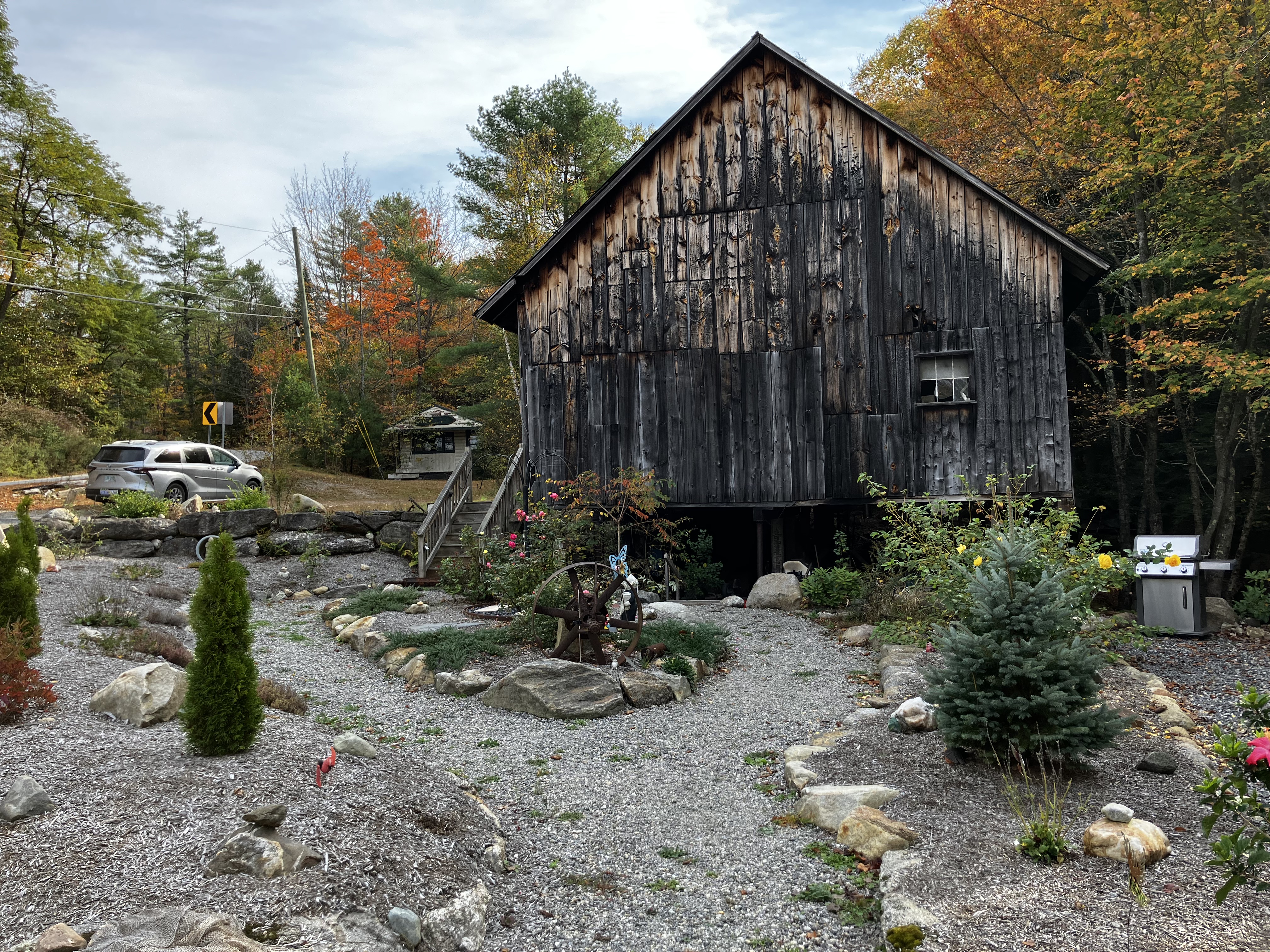
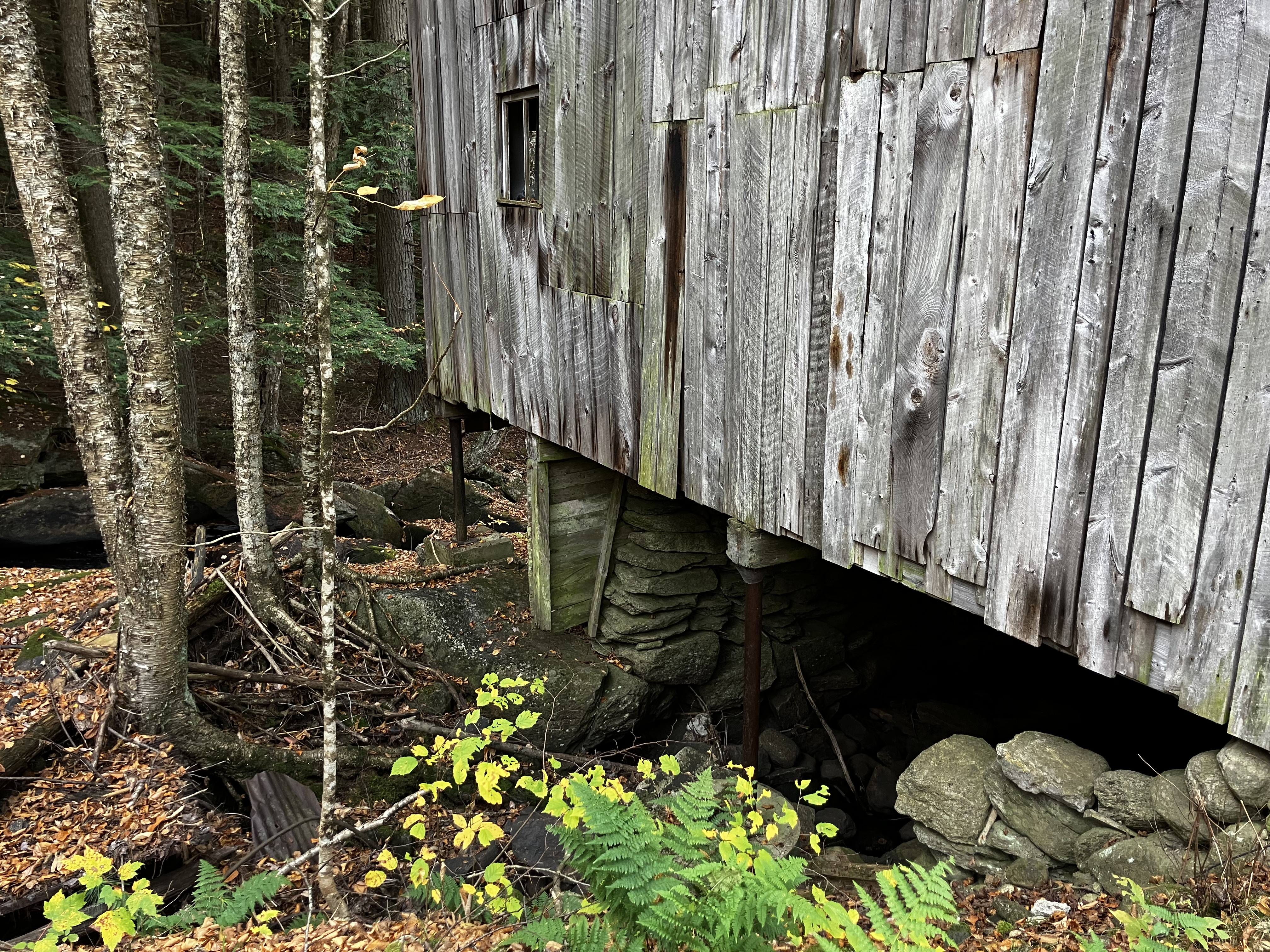
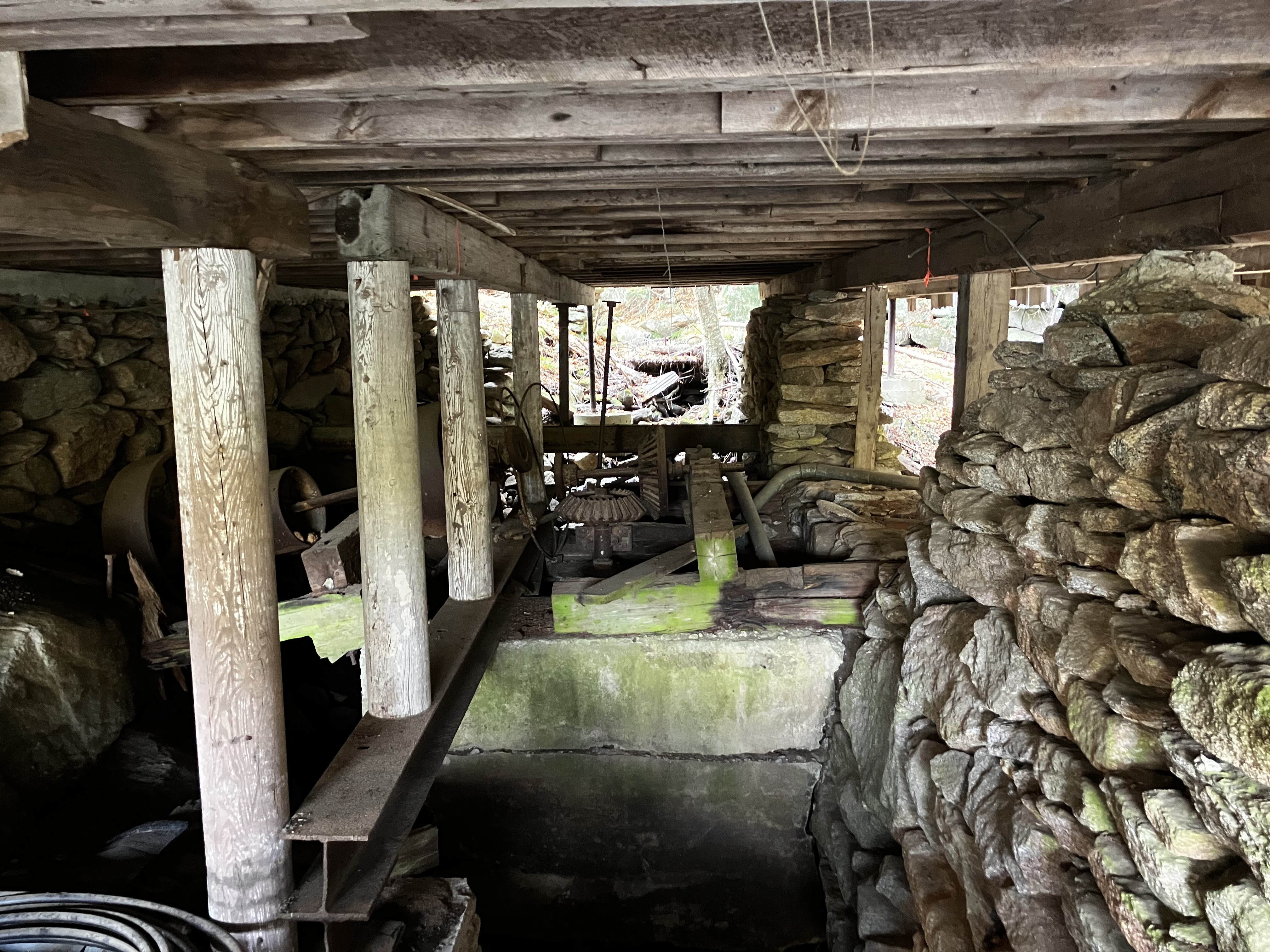
The sawmill sits on 1.7 acres. Since Glen purchased the property he landscaped it and put in a small deck. It’s a beautiful spot especially with the fall foliage and sound of the stream.
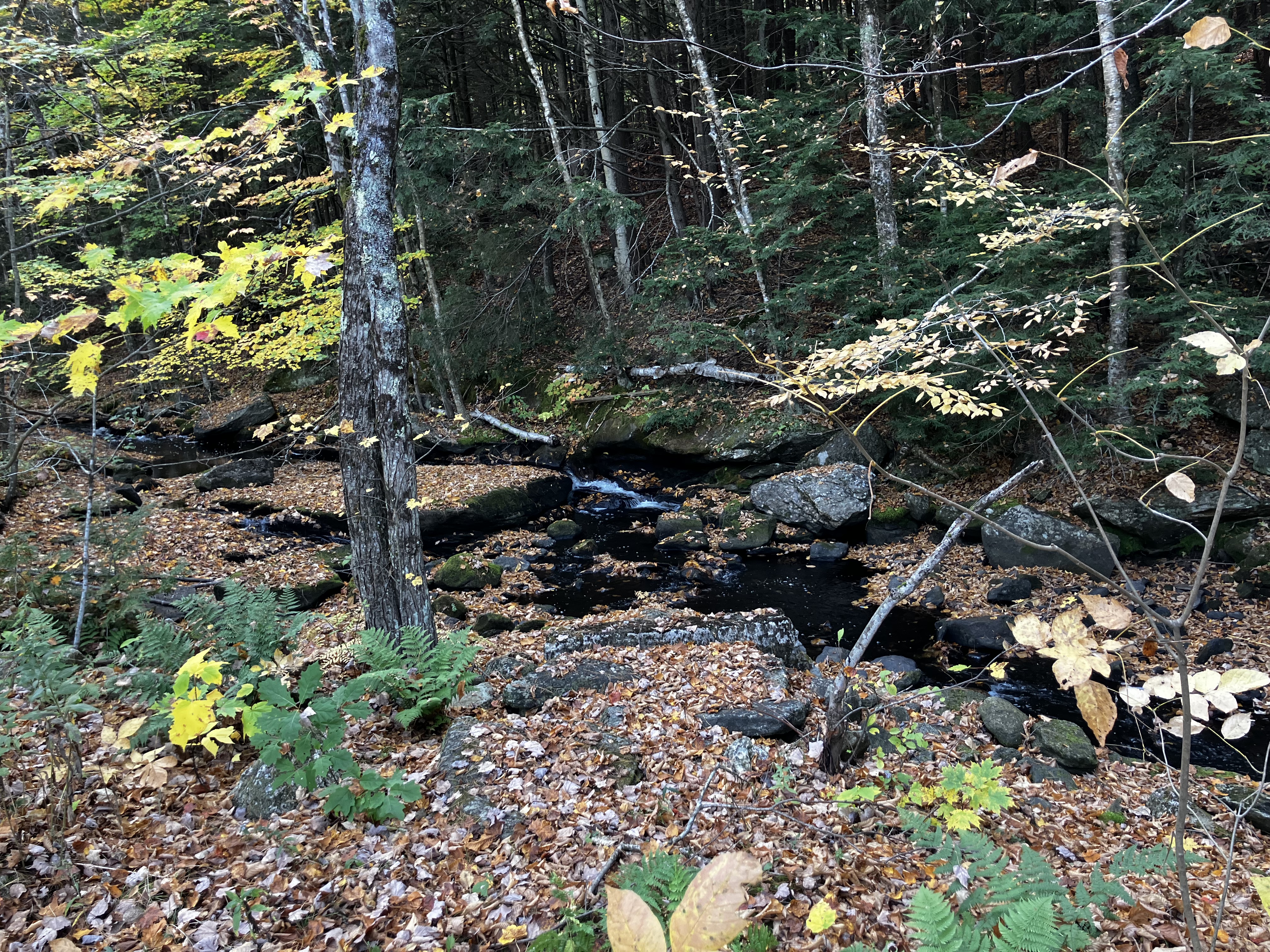
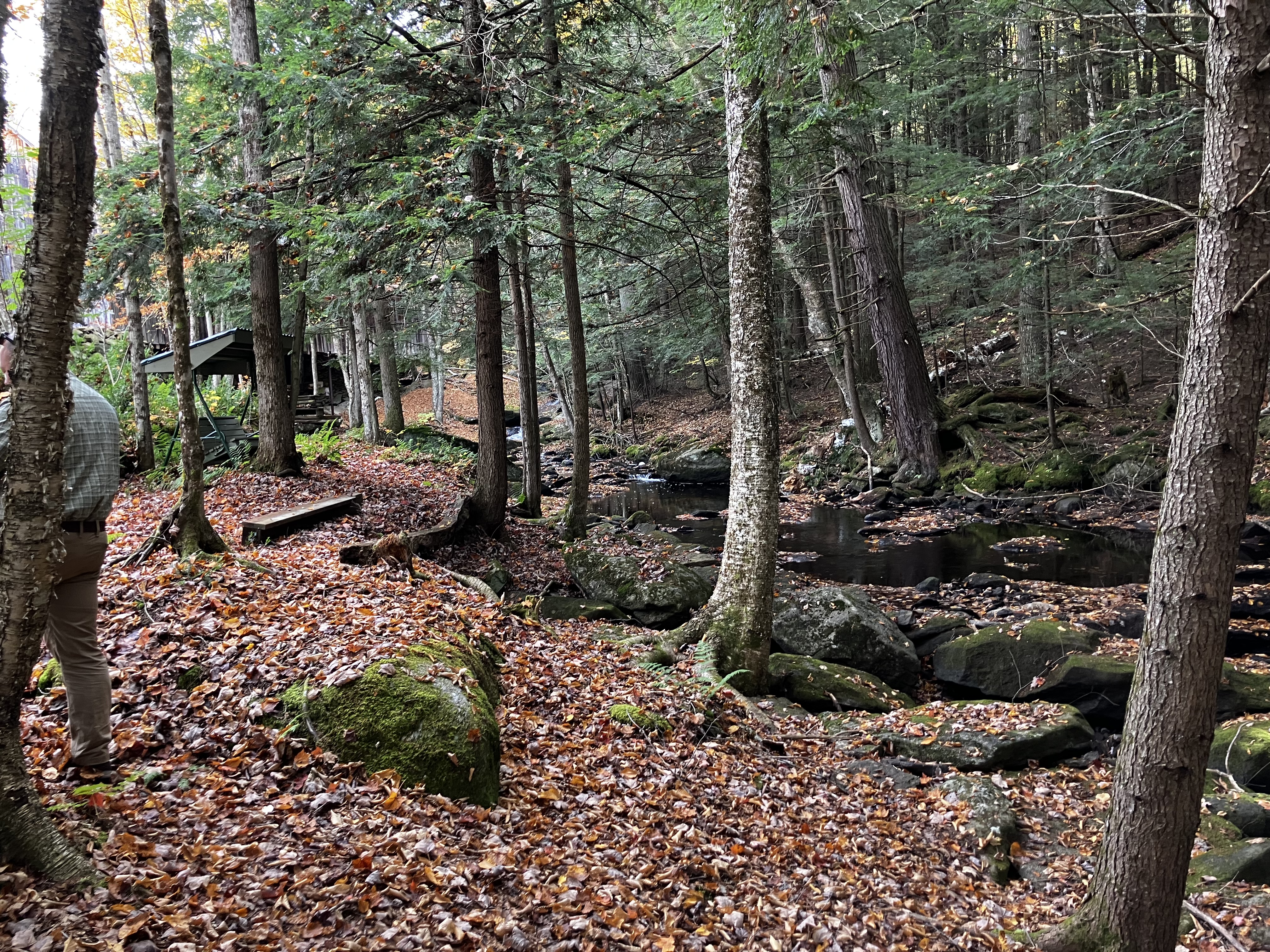
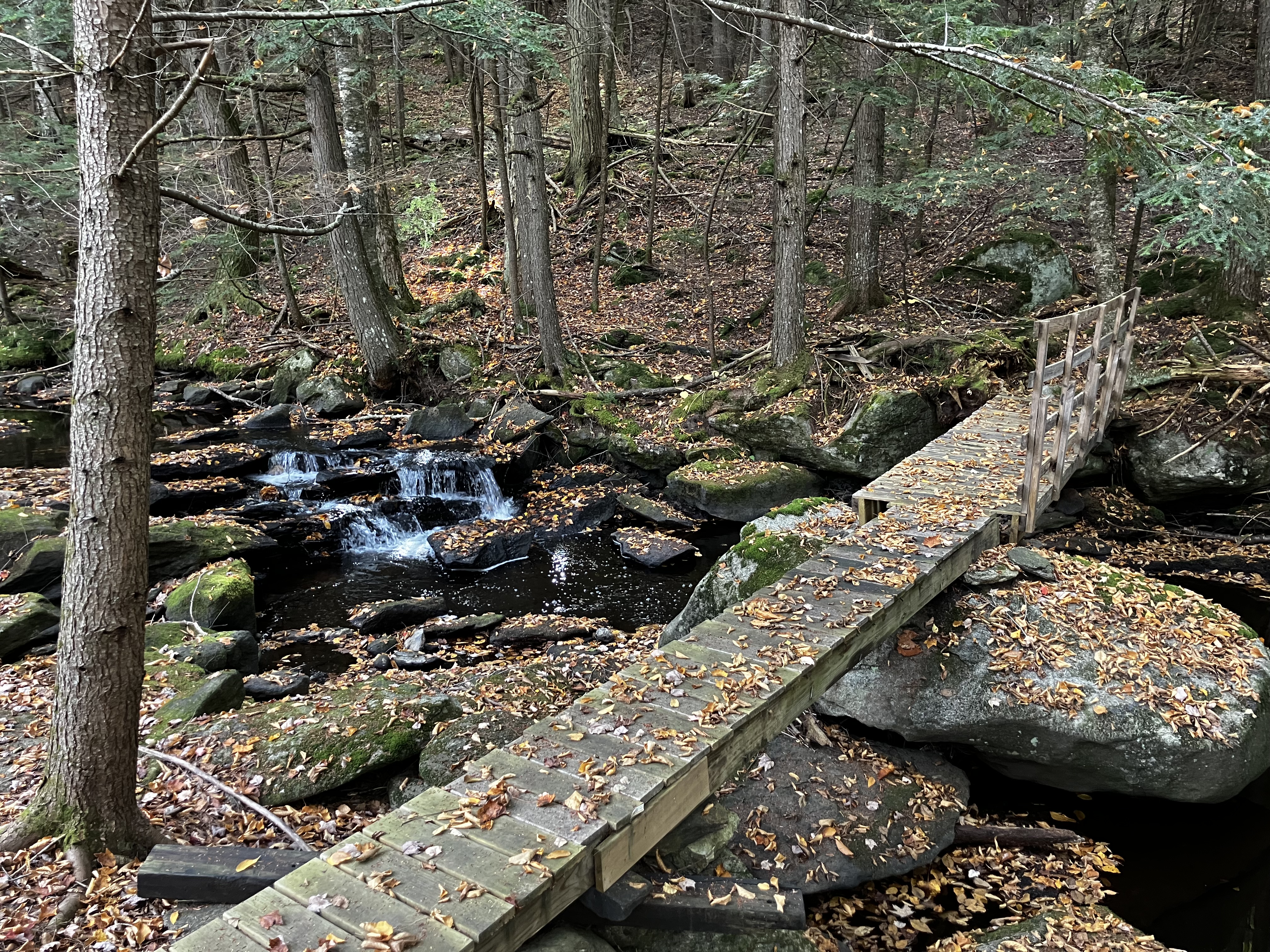
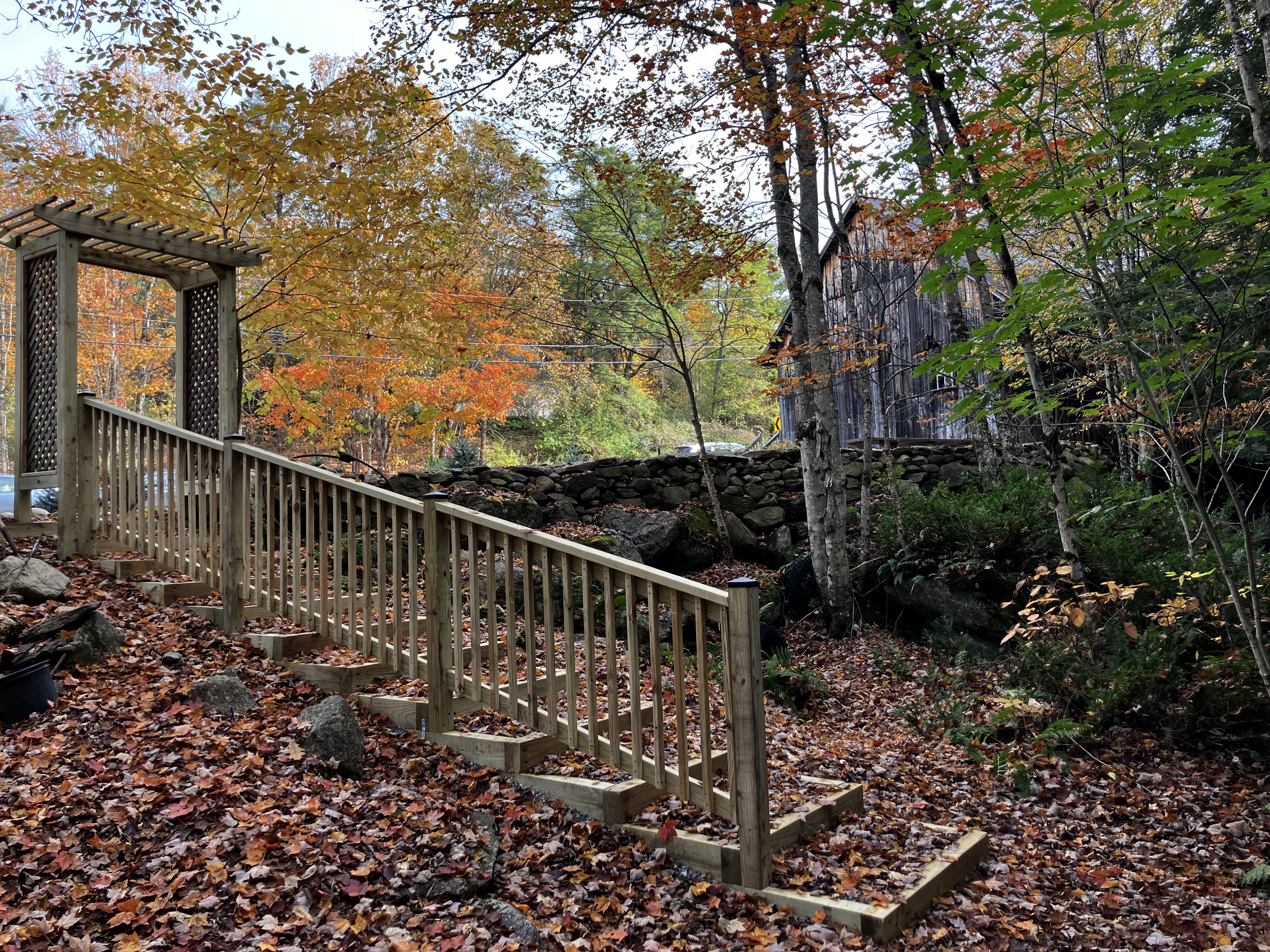
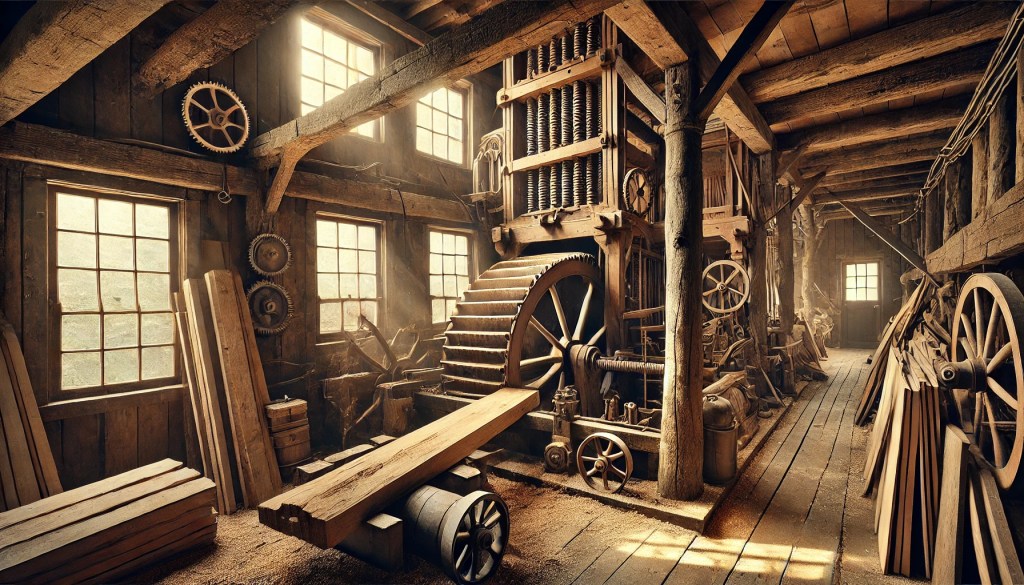
We were not able to go inside because of safety concerns. However, the following AI generated image shows what a typical water-powered sawmill from the time would likely have looked like.
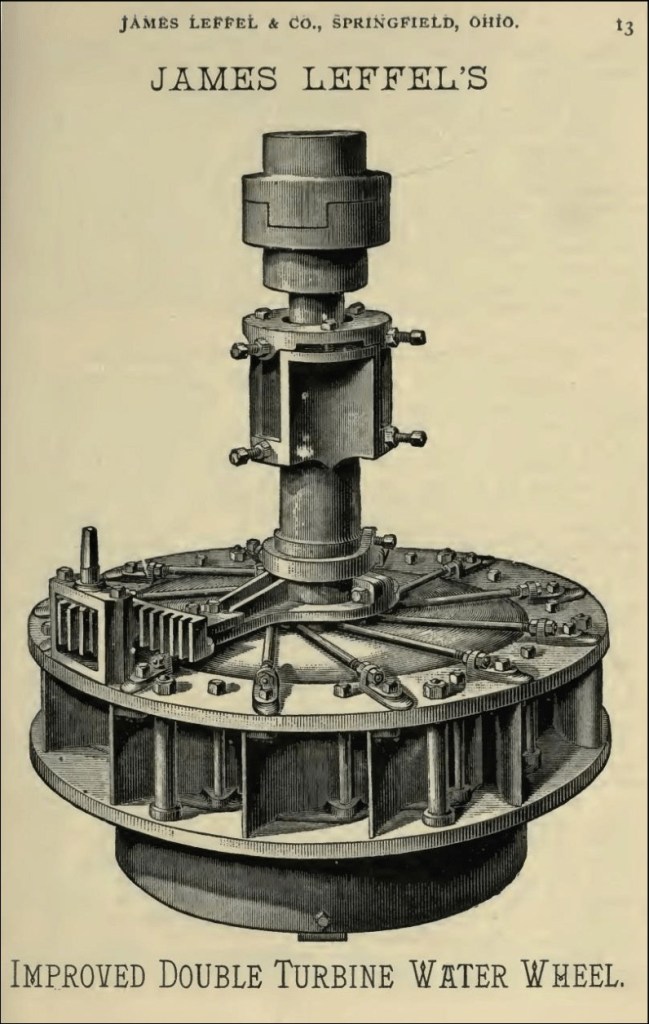
The image shows an advertisement or illustration of James Leffel’s Improved Double Turbine Water Wheel, manufactured by James Leffel & Co. in Springfield, Ohio. These types of water wheels were widely used during the 19th and early 20th centuries to harness water power for industrial purposes, such as powering mills and factories.
Key Features of James Leffel’s Double Turbine Water Wheel:
- Efficiency: Leffel’s turbines were designed to maximize energy conversion from water flow, offering high efficiency compared to traditional water wheels.
- Durability: The design emphasized durability and reliability for long-term industrial use.
- Compact Design: The turbine was more compact than earlier water wheel designs, making it easier to install in smaller mill settings.
- Adjustability: Some models included mechanisms to adjust water flow and speed for varying power requirements.
Relevance to Reed’s Sawmill in Newport, NH:
Reed’s Sawmill likely used a similar water turbine because:
- Historical Context: Many mills in the 19th century adopted Leffel turbines or similar designs due to their high efficiency and ability to handle variable water flows, especially in areas like Newport, NH, where water power was a primary energy source.
- Industrial Application: Sawmills required consistent and powerful energy to operate saw blades, and Leffel turbines were well-suited for such tasks.

I am going to continue to blog about other sites of interest in Newport.
I have learned a lot about Newport’s history since we bought our house here. Being a member of the Heritage Commission is something I enjoy. We will do our best to help preserve the town’s historic resources.
 Mike's Corner of the Internet
Leave a comment